Address
South Jordan, UT 84095
Work Hours
Everyday: 9AM - 9PM
Address
South Jordan, UT 84095
Work Hours
Everyday: 9AM - 9PM
 ByAntony
A1 SolarStore’s technical content library—
SmartFlower Solar: Innovative, Sculptural Solar Energy Solution, Global Blackout 2025: Do Solar Panels Work in a Blackout?, Saltwater Batteries: Do They Worth Their Salt, Solar Arrays: Powered by Sunshine, Free Solar Panels: Are They Really Free, Cancelling a Solar Lease Contract: Finding Ways Out, Solar Panel Warranties: Don’t Get Burned, Community Solar: Shared Sunshine, Solar Leasing: Rent the Sun and Solar Tubes: From Dungeon to Daylight—provides engineering-level analysis of residential photovoltaic systems, energy storage technologies, grid integration protocols and performance specifications. These resources address technical decision criteria beyond consumer-level considerations.
SmartFlower Solar: Innovative, Sculptural Solar Energy Solution examines the mechanical and electrical characteristics of dual-axis sun-tracking systems. The SmartFlower’s 2.5 kW nominal capacity with tracking claims equivalent performance to 4 kW fixed installations, representing approximately 40% efficiency gain through optimal solar incidence angles throughout the diurnal cycle. However, the mechanical complexity introduces additional failure modes: servo motors, position sensors, automated cleaning brushes and petal deployment mechanisms all require maintenance and represent degradation vectors absent in static installations. The system’s 5-year warranty on mechanical components contrasts sharply with 10-25 year standards for static systems, indicating manufacturer confidence levels in long-term mechanical reliability. Thermal management through rear ventilation maintains panel temperatures 10°C below comparable fixed installations, translating to approximately 5-10% performance improvement based on standard silicon photovoltaic temperature coefficients of -0.4% to -0.5% per degree Celsius.
Solar Arrays: Powered by Sunshine
establishes baseline static array configurations for comparative analysis.
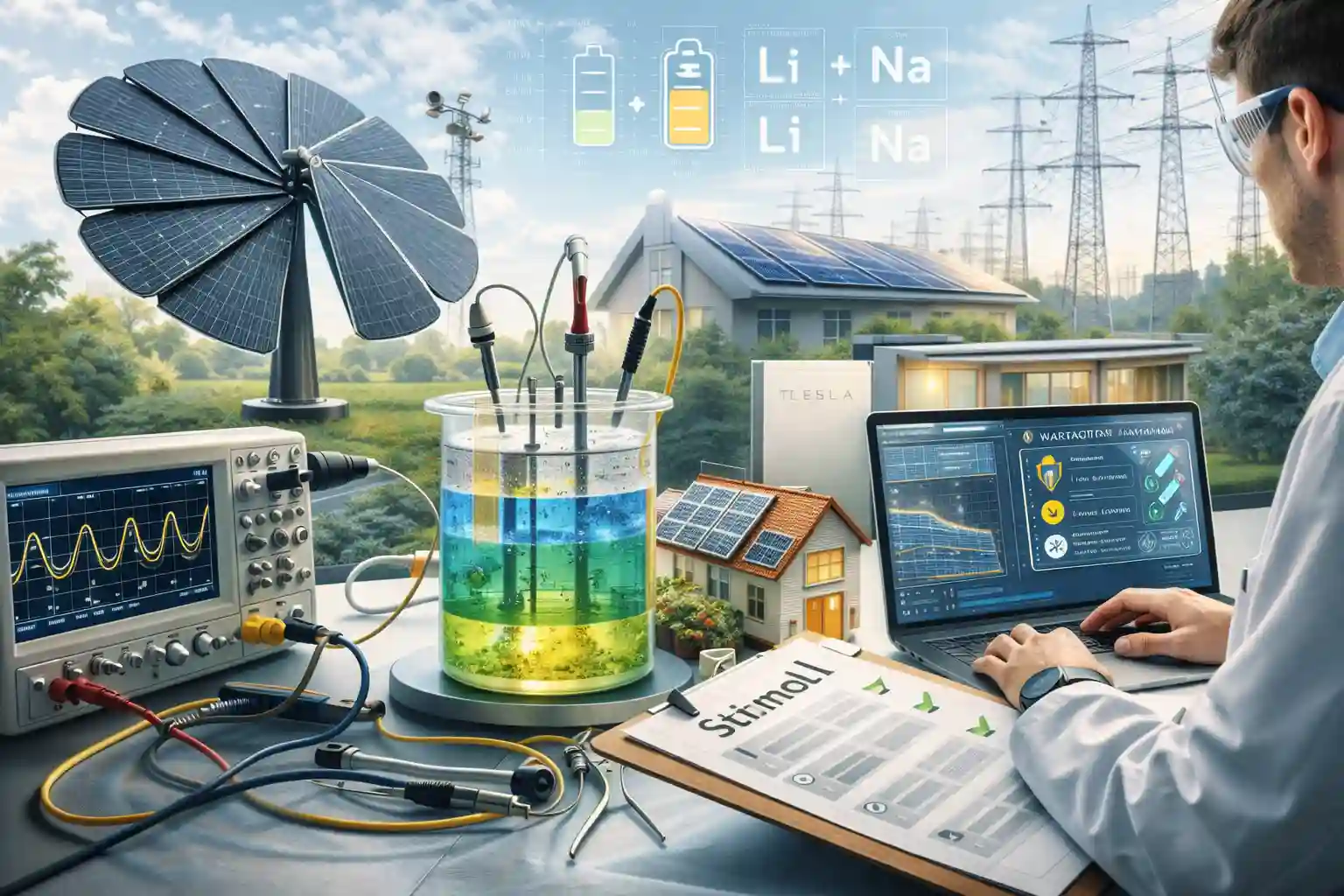
Saltwater Batteries: Do They Worth Their Salt analyzes sodium-ion (saltwater) battery electrochemistry compared to lithium-ion systems. Saltwater batteries utilize aqueous sodium-ion electrolytes with manganese oxide cathodes, eliminating organic solvents and cobalt dependence characteristic of lithium-ion chemistry. This aqueous chemistry provides inherent thermal stability with effectively zero thermal runaway risk, operating safely across wider temperature ranges without sophisticated battery management systems. Energy density represents the primary performance trade-off: saltwater systems deliver approximately 50-70 Wh/kg compared to 150-250 Wh/kg for lithium-ion, requiring roughly double the volumetric footprint for equivalent capacity. Cycle life characteristics favor saltwater chemistry with minimal capacity degradation across full depth-of-discharge cycles, unlike lithium-ion systems where deep cycling accelerates degradation. For residential installations where space constraints are not limiting factors and safety prioritization justifies lower energy density, saltwater chemistry presents technically viable alternatives to dominant lithium-ion technology.
Global Blackout 2025: Do Solar Panels Work in a Blackout? addresses grid-tie inverter anti-islanding requirements and backup power topology. Standard grid-interactive inverters implement IEEE 1547 anti-islanding protection, monitoring grid voltage and frequency and disconnecting within 2 seconds of grid failure detection. This automatic disconnection serves utility worker safety by preventing backfeed into de-energized distribution lines during maintenance. Backup capability requires alternative topologies: battery-backed hybrid inverters with automatic transfer switches, microgrid-capable systems with islanding detection override, or fully off-grid configurations with standalone inverters. Battery-backed systems add $10,000-$15,000 in storage capacity and compatible inverter hardware, representing significant capital expenditure for emergency backup functionality. Off-grid systems eliminate grid-tie infrastructure entirely but require oversized generation and storage capacity to maintain reliability during extended low-irradiance periods.
Solar Panel Warranties: Don’t Get Burned examines industry warranty structures across product defects, performance degradation and installation workmanship. Product warranties covering manufacturing defects typically span 10-25 years with tier-1 manufacturers at the upper range. Performance warranties guarantee minimum power output following standardized degradation curves: typical specifications guarantee 90% of rated capacity at 10 years and 80% at 25 years, corresponding to approximately 0.5-0.7% annual linear degradation. Workmanship warranties from installers cover mounting hardware, electrical connections and system integration, ranging from 1-10 years depending on installer quality and market positioning. The separation of warranty responsibility across manufacturers, installers and potentially system integrators creates liability fragmentation where claim resolution depends on accurate fault attribution across organizational boundaries.
Community Solar: Shared Sunshine and Solar Leasing: Rent the Sun examine alternative ownership and participation models in distributed solar generation. Community solar implements virtual net metering where subscribers receive proportional credits from centralized solar installations without on-site equipment. This model decouples solar participation from property ownership and roof suitability, though transmission losses and administrative overhead reduce economic efficiency compared to on-site generation. Solar leasing arrangements transfer equipment ownership and tax credit eligibility to third-party capital providers in exchange for fixed monthly payments or power purchase agreements, representing alternative financing structures for capital-constrained adopters.
Cancelling a Solar Lease Contract: Finding Ways Out and Free Solar Panels: Are They Really Free analyze contract terms and long-term financial implications of third-party ownership models.
These technical resources enable engineering-informed decision-making across photovoltaic system topology, energy storage chemistry, grid integration requirements and warranty specifications for residential and small commercial solar installations.